

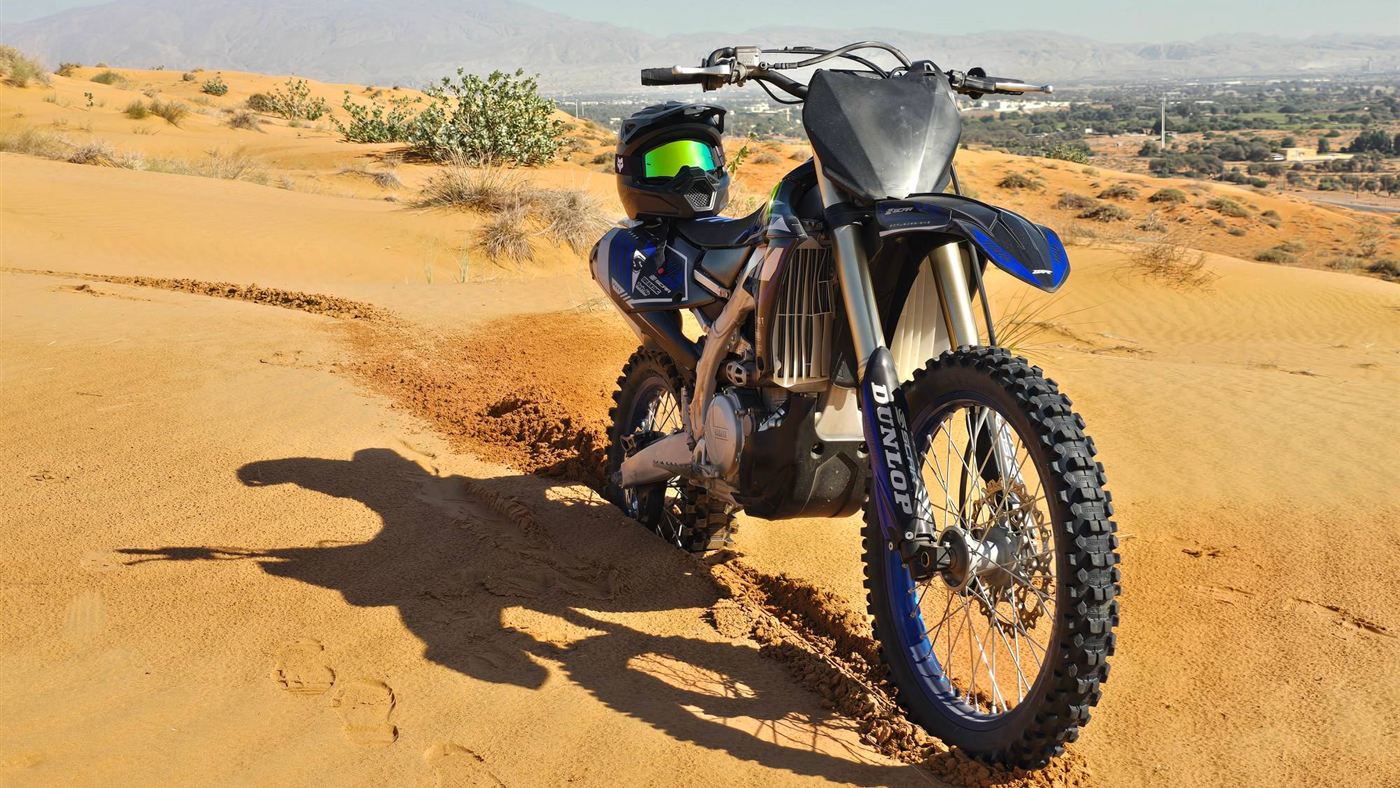
As the worst of the summer heat fades, riders across Ras Al Khaimah are pulling covers off bikes that have barely moved since June. Some have sat in a garage, some under a carport, and plenty have only done short early-morning runs. It's tempting to charge the battery, hit the starter and go. But a UAE summer is hard on a motorbike even when it isn't being ridden, and the faults it leaves behind tend to show up at the worst time: on the first long ride, far from home.
Why a UAE Summer Is Hard on a Parked Bike
Heat ages almost everything on a motorbike faster than people expect. Rubber hardens, fluids degrade, batteries lose charge and fuel goes stale, and near the coast, high humidity adds moisture to the mix. Plastics and seats fade under UV, and fine dust gets into places you can't see. None of this needs miles on the clock. A bike that sat for four months has aged four months, and a quick check before the season starts is far cheaper than a breakdown or an accident.
Fuel and the Fuel System
Petrol that's been sitting in a tank through months of heat can degrade, leaving varnish and gum behind that clogs jets, injectors and fuel filters. The usual symptoms are hard starting, a rough or hunting idle, hesitation, or a bike that starts fine and then stalls. A tank that sat partly empty can also collect condensation in humid weather. If your bike has been standing for months, the safest approach is usually to replace the old fuel rather than ride on it, and to have the fuel filter and lines checked, especially on carbureted bikes and older machines.
Battery and Electrics
Every battery slowly discharges when a bike sits, and heat speeds that up and shortens battery life overall. A battery that went completely flat over summer may never fully recover, even if it takes a charge. Before you ride, have it load-tested rather than just charged, check the terminals for corrosion, and confirm the charging system is actually putting current back in. Then run through the basics: headlight (high and low beam), brake light on both lever and pedal, indicators, horn, and any switchgear or dash warnings. A weak connection found in the garage is an easy fix; one found at night on a quiet road is not.
Tyres: Age Matters as Much as Tread
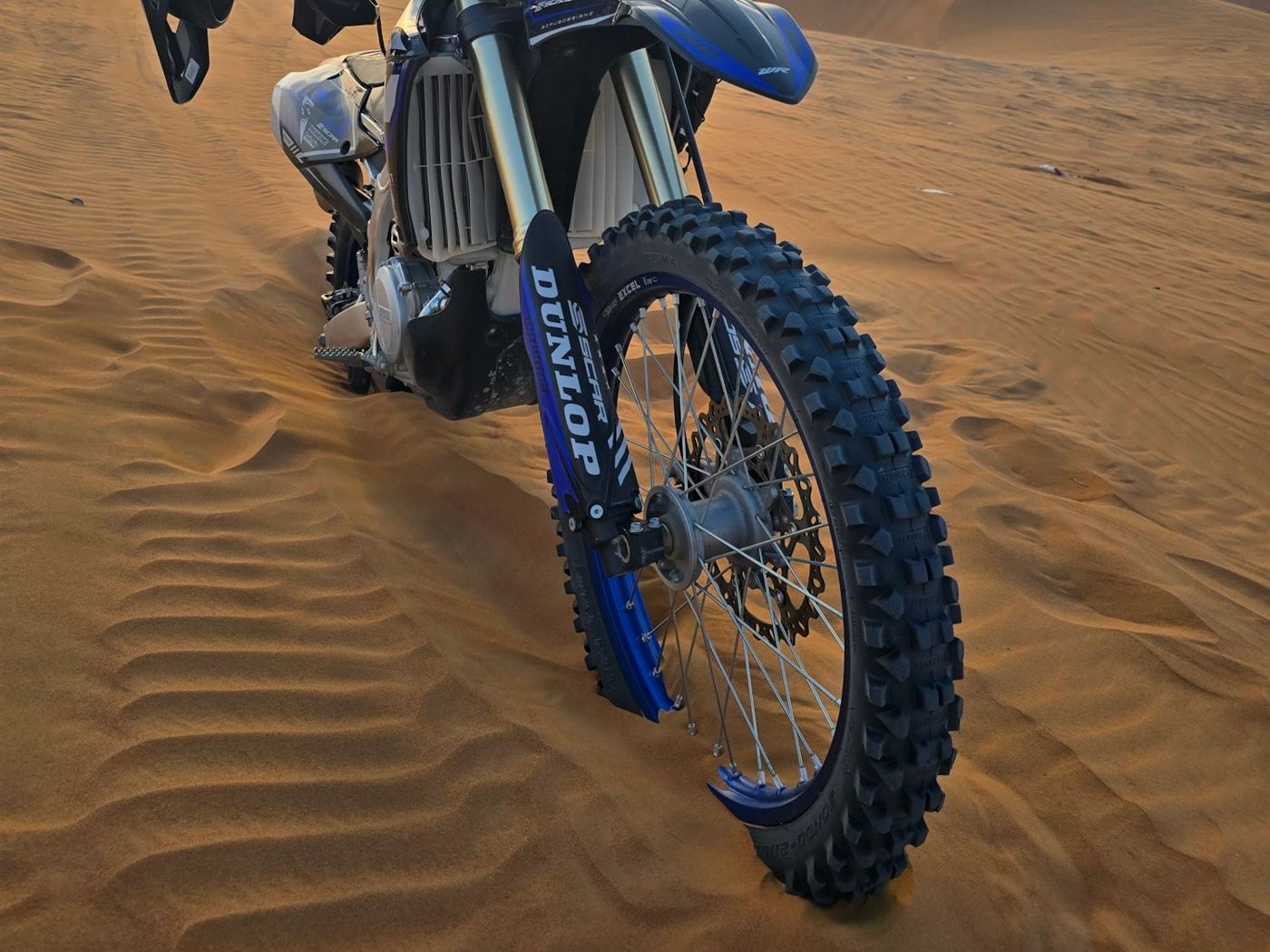
Tyre rubber hardens and cracks with heat and UV, so a tyre can look fine, with plenty of tread, and still be well past its best. Check the four-digit date code moulded into the sidewall (week and year of manufacture). As a general rule of thumb, tyres that are five or six years old deserve a very close look whatever the tread says. Look for cracking in the sidewall or between the tread blocks, flat spots from standing, and any bulges or embedded objects, and set pressures cold, to the manufacturer's figures, before every ride. On a bike, two small contact patches are all that connect you to the road, so this is not the place to economise.
Brakes, Brake Fluid and Coolant
Brake fluid absorbs moisture from the air over time, which lowers its boiling point and can make braking feel spongy under hard use. Most manufacturers recommend changing it on a time schedule, commonly every one to two years, regardless of mileage, so a bike that has just come out of storage is a good moment to check. Inspect pads and discs for wear, look at the brake lines and hoses for cracking, and make sure the levers and pedal feel firm and return properly. On liquid-cooled bikes, check coolant level and condition, hoses and the radiator, because overheating in UAE traffic is far less forgiving than on a cool day. And don't go by kilometres alone for engine oil: heat and idle time degrade it, so if the oil is due by time, change the oil and filter before the season starts.
Chain, Sprockets and Suspension
A chain left dry through a humid summer can rust and stiffen, and a worn or neglected chain and sprocket set wears out quickly and can fail without much warning. Clean it, lubricate it, set the tension to spec, and look for hooked or shark-fin sprocket teeth, which mean the set needs replacing together. On the front end, wipe the fork tubes and look for oil seeping past the seals, since sitting and dust are hard on fork seals, and check that the steering moves smoothly without notchiness or play. Suspension that feels harsh, bouncy or uneven is telling you something before it becomes a safety problem.
Dust, Sand and the Air Filter
If you ride in the desert or on dusty tracks, your air filter is your engine's first and last line of defence against sand, which is why a clogged or damaged filter is one of the most common causes of poor performance and premature engine wear. Inspect it before the first ride, clean or replace it as the manufacturer specifies, and check that the airbox seals properly and nothing has been left loose in the intake. After sandy rides, wash off the grit, and re-lubricate the chain, because sand mixed with oil makes an effective grinding paste.
Your Gear Needs Checking Too
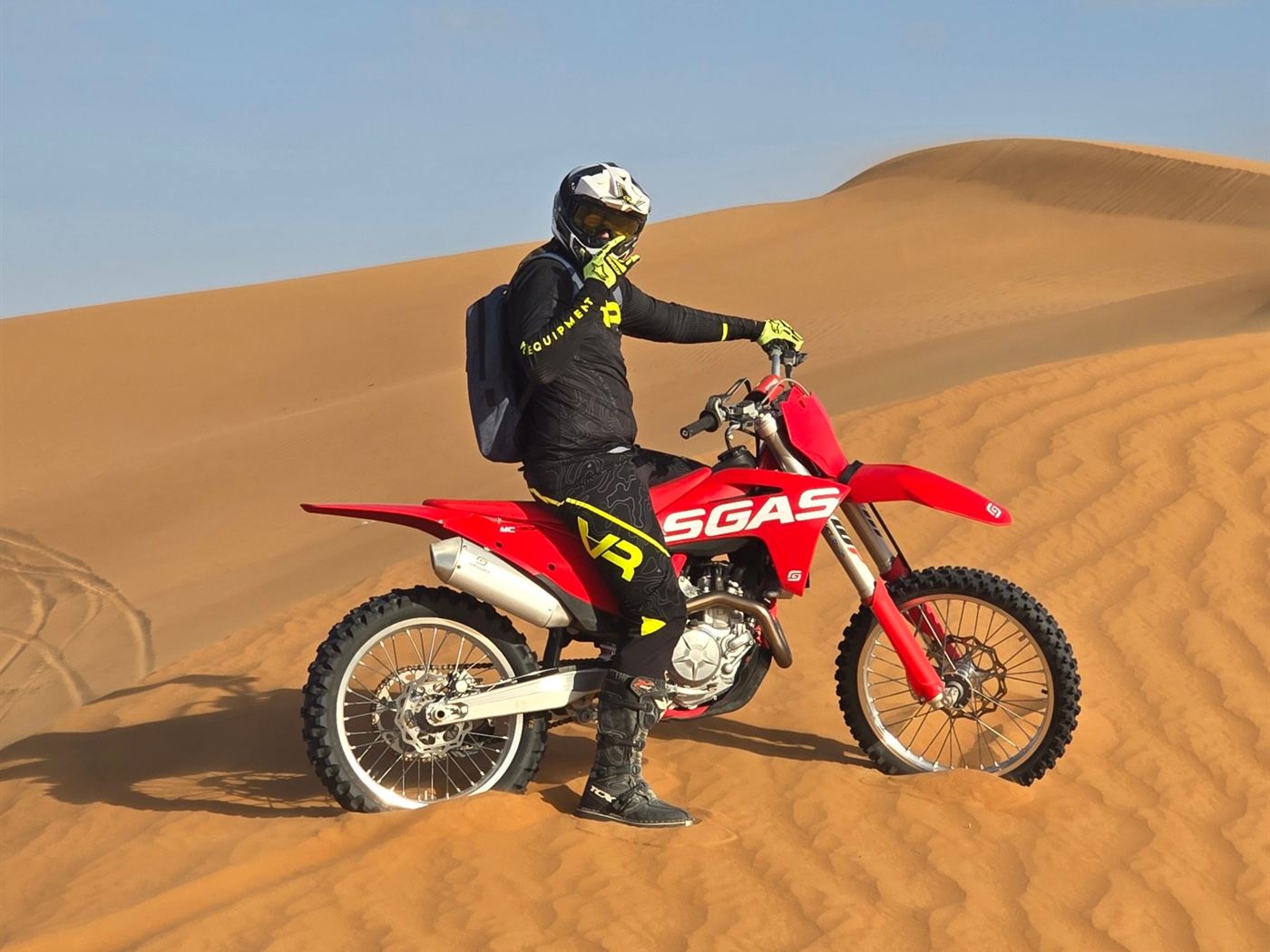
Safety gear is part of the bike's safety system. Helmets, for example, age: many manufacturers recommend replacing them roughly every five years, or immediately after any impact, and a helmet that's spent summers in a hot garage or car is worth inspecting for a degraded liner or strap. Check visors and straps, and make sure gloves, jackets and boots are in good condition. If you're heading into the desert, pack water, tell someone your route, and carry a basic tool and puncture kit.
Start-of-Season Motorbike Checklist
- Replace old fuel if the bike has sat for months, and check the fuel filter and lines
- Load test the battery and check terminals, charging output and all lights, indicators and horn
- Check tyre date codes, sidewall cracking, and set cold pressures to spec
- Inspect brake pads, discs, hoses, and check brake fluid age and condition
- Check coolant level and condition on liquid-cooled bikes, and look at hoses and the radiator
- Change engine oil and filter if it's due by time, not just by kilometres
- Clean, lubricate and adjust the chain, and check sprockets for wear
- Look for oil leaking past fork seals, and check steering smoothness and play
- Inspect and clean or replace the air filter, especially before desert riding
- Check your helmet, visor, straps and riding gear are in good condition
When to Bring Your Bike In
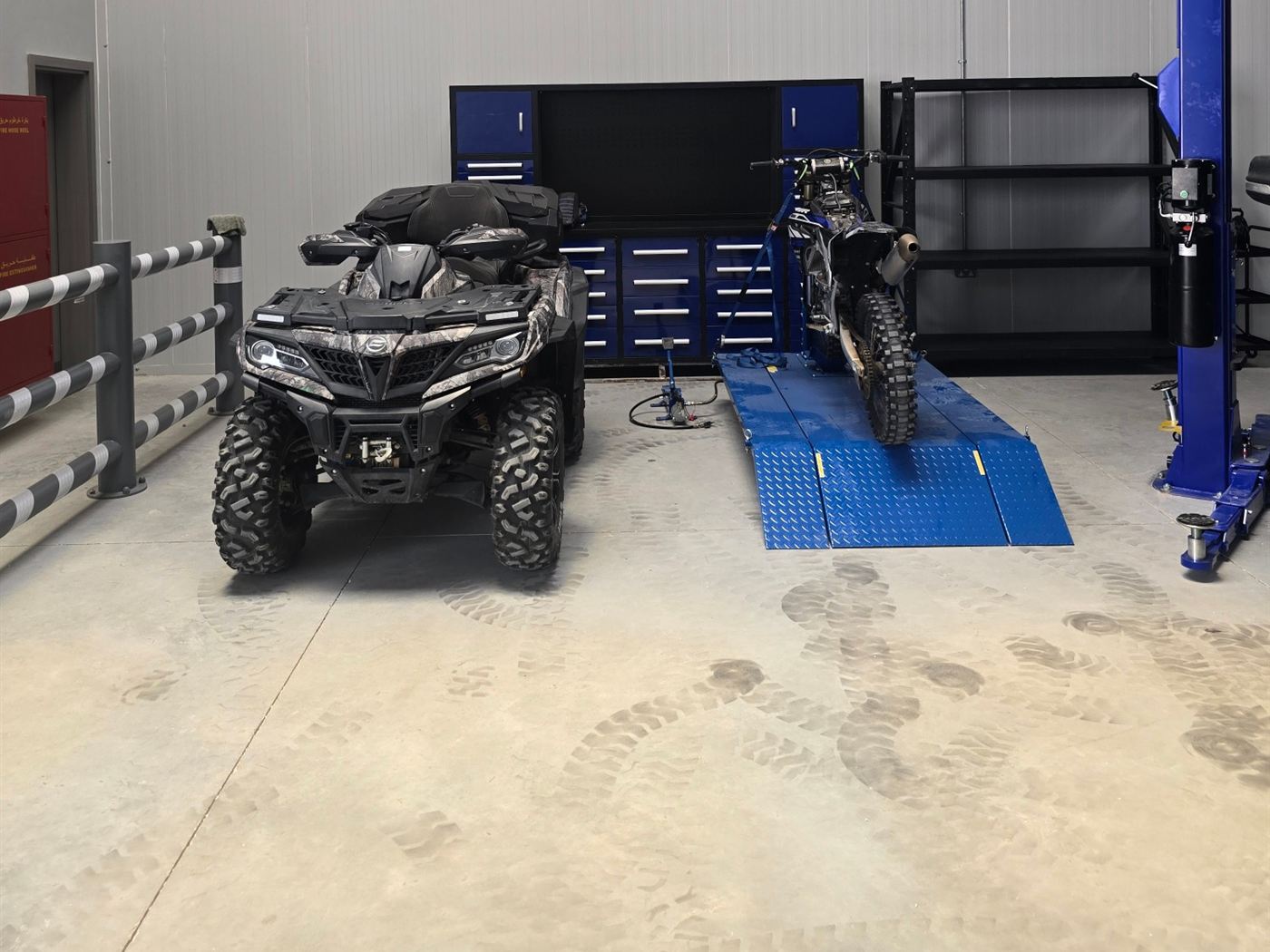
Most of what's covered here can be checked properly in under an hour by someone who knows what to look for, and it's far better done in the workshop than at the side of the road. At Western Auto and Marine we service everything from cruisers and sport bikes to adventure bikes, dirt bikes and scooters, including Harley-Davidson, Honda, Yamaha, Suzuki, Kawasaki, BMW Motorrad, Ducati, KTM, Triumph, Royal Enfield, Aprilia, CFMoto and GasGas. You can see what we do on our motorbike servicing page.
Book a pre-ride check with our technicians on WhatsApp before your first big ride of the season. We'll diagnose first, explain what your bike actually needs, and give you a clear quote before any work starts.